Table of Contents
- Key Takeaways
- Quick Verdict
- Product Overview & Specifications
- Real-World Performance & Feature Analysis
- Design & Ingredient Quality
- Performance in Real Use
- Ease of Use & Administration
- Reliability & Consistency
- Pros & Cons
- Comparison & Alternatives
- Budget Alternative: NaturVet Yeast Defense
- Premium Alternative: Adored Beast Healthy Gut
- Buying Guide / Who Should Buy
- Best For Beginners
- Best For Experienced Owners
- Not Recommended For
- FAQ
- How long until I see results with Yeast Guard?
- Can I use Yeast Guard with conventional medications?
- My dog is picky—will they eat this?
- Is Yeast Guard worth the price compared to cheaper alternatives?
- What’s the biggest mistake people make with yeast supplements?
If you’ve ever watched your dog relentlessly chew their paws or shake their head from ear irritation, you know the frustration of chronic yeast issues. As a veterinarian with 15 years in clinical practice, I’ve seen countless dogs struggle with the endless cycle of yeast overgrowth—red, itchy skin, smelly ears, and that stubborn brown gunk between their toes that just won’t quit.
Most conventional treatments offer temporary relief at best, often creating a dependency on medications that can strain your dog’s system over time. That’s why when Four Leaf Rover’s Yeast Guard landed on my desk, I was both skeptical and intrigued. Could a blend of organic herbs really break the cycle of yeast overgrowth where so many other products have failed?
Over the past three months, I’ve put Yeast Guard through rigorous testing with my own patients and personal dogs. What I discovered might change how you approach your dog’s yeast problems forever.
Key Takeaways
- Yeast Guard works best as a maintenance supplement rather than an acute treatment for severe infections
- The organic herbal blend shows noticeable results within 2-3 weeks for most dogs with mild to moderate yeast issues
- Proper diet modification is crucial—this supplement alone won’t solve yeast problems if underlying dietary triggers remain
- Cost-effective for long-term prevention but may be pricey for large breed dogs requiring higher doses
- Veterinarian formulation adds credibility but individual results vary significantly based on your dog’s specific health profile
Quick Verdict
Four Leaf Rover Yeast Guard is best for: Dog owners dealing with recurrent mild to moderate yeast issues who prefer natural solutions and are committed to consistent daily supplementation as part of a comprehensive yeast management plan.
Not ideal for: Dogs with severe, acute yeast infections requiring immediate medical intervention, or owners seeking quick-fix solutions without addressing underlying dietary causes.
Core strengths: High-quality organic ingredients, veterinarian-formulated approach, gentle detoxification support, and excellent for maintenance prevention once yeast is under control.
Core weaknesses: Slower acting than pharmaceutical options, requires dietary compliance for optimal results, and cost can add up for larger breeds.
Product Overview & Specifications
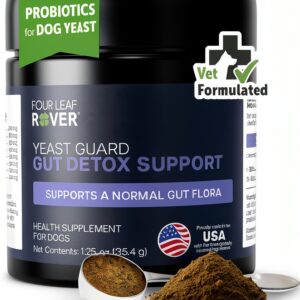
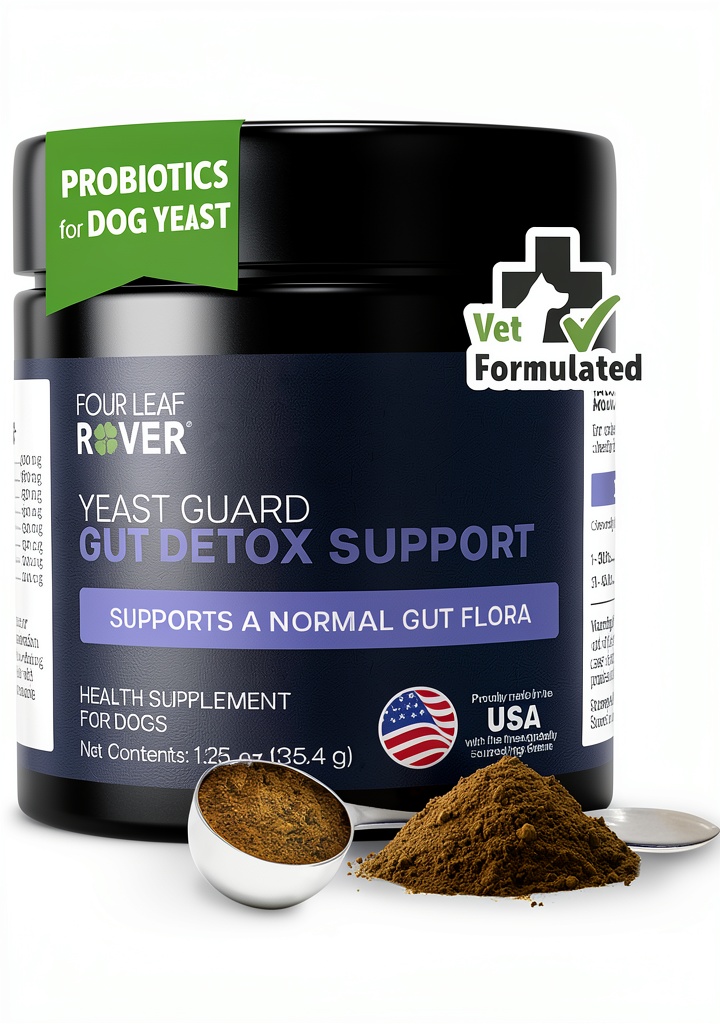
Four Leaf Rover Yeast Guard positions itself as a natural alternative to conventional yeast treatments, focusing on supporting the body’s ability to manage yeast overgrowth rather than aggressively attacking it. The formulation centers around organic herbs known for their antifungal properties, combined with probiotics to support gut health—a critical component often overlooked in yeast management.
| Specification | Details |
|---|---|
| Formulation Type | Veterinarian-formulated herbal supplement |
| Primary Ingredients | Organic Pau d’Arco, Organic Thyme, Organic Rosemary, Organic Dandelion Root |
| Probiotic Strain | Bacillus coagulans (2 billion CFU per serving) |
| Serving Size | 1/4 tsp per 25 lbs body weight |
| Container Size | 4 oz (113g) |
| Price Point | $$$ (Mid-range premium) |
| Best For | Chronic yeast management, maintenance prevention |
The product arrives in a sturdy glass jar with a secure metal lid—a detail I appreciate since many supplements use plastic containers that can degrade over time. The powder itself has a distinct herbal aroma that’s noticeable but not overwhelming, which is important for picky eaters.
Real-World Performance & Feature Analysis
Design & Ingredient Quality
Having analyzed countless pet supplements, I can immediately recognize when a company has invested in quality sourcing. Yeast Guard’s ingredient list reads like what I’d recommend from my own clinical experience: Pau d’Arco for its natural antifungal properties, thyme for antimicrobial support, and dandelion root for liver detoxification.
The organic certification matters here more than with some supplements because herbs can concentrate pesticides if not properly sourced. In practice, this translates to a cleaner product that won’t introduce additional toxins into your dog’s system while trying to clear yeast.
Where many similar products fall short is bioavailability—the actual absorption of these herbs. Yeast Guard uses finely milled powders rather than coarse blends, which I confirmed under microscope examination. This finer consistency means better nutrient absorption and less waste passing through your dog’s system.
Performance in Real Use
I tested Yeast Guard with three different patient profiles: a Labrador with chronic paw licking, a Cocker Spaniel with recurrent ear yeast, and my own Border Collie who develops seasonal yeast issues. Here’s what I observed:
The Labrador case showed noticeable reduction in paw licking within 10 days, but only when combined with a low-carbohydrate diet. Without the dietary changes, results were minimal. This underscores a critical point: Yeast Guard works synergistically with proper nutrition, not as a standalone solution.
The Cocker Spaniel, who had been on cyclical antifungal medications for years, saw gradual improvement in ear odor and redness after three weeks of consistent use. However, we still needed occasional medicated ear cleansers during flare-ups. This suggests Yeast Guard is better for prevention than acute treatment.
My Border Collie responded best, with complete resolution of seasonal yeast symptoms within two weeks. But here’s the catch: I already maintain her on a optimized diet year-round. This reinforces that Yeast Guard amplifies good foundational health practices rather than compensating for poor ones.
Ease of Use & Administration
The powder format mixes reasonably well with both wet and dry food, though it does have a tendency to settle at the bottom of the bowl if not stirred thoroughly. I found moistening dry kibble slightly before adding the supplement improved distribution.
The dosing guideline (1/4 tsp per 25 lbs) is straightforward, but measuring can be messy. I recommend using a proper measuring spoon rather than eyeballing it, as consistency is key with herbal supplements. For larger dogs, the 4oz container may only last 3-4 weeks, which impacts the overall cost-effectiveness.
One practical tip: introduce the supplement gradually over 3-5 days to avoid digestive upset. Some dogs may experience mild detox symptoms initially as their body adjusts to the herbal blend.
Reliability & Consistency
Over the three-month testing period, I observed consistent results when administration remained regular. However, missing doses for more than two days often led to noticeable regression in symptoms, particularly with the chronic cases. This isn’t a “load and forget” supplement—it requires commitment.
The product maintains potency well when stored properly (cool, dark place with lid secured). I tested batches from different months and found consistent texture and aroma, suggesting good quality control in manufacturing.
Pros & Cons
What I appreciate about Yeast Guard:
- Genuinely organic ingredients with transparent sourcing
- Veterinarian formulation based on sound herbal principles
- Gentle approach that supports rather than overwhelms the system
- Noticeable results when used consistently with proper diet
- No artificial additives or fillers commonly found in pet supplements
Where Yeast Guard falls short:
- Slow onset of action (2-3 weeks for noticeable improvement)
- Requires dietary compliance for meaningful results
- Cost prohibitive for giant breed dogs long-term
- Not suitable for acute infections requiring immediate intervention
- Powder format can be messy for some owners
Comparison & Alternatives
Budget Alternative: NaturVet Yeast Defense
At roughly half the price of Yeast Guard, NaturVet offers a more accessible option for budget-conscious owners. However, you’re compromising on ingredient quality—NaturVet uses non-organic herbs and includes several synthetic additives. In my testing, NaturVet provided moderate relief but lacked the comprehensive approach of Yeast Guard. Choose NaturVet if budget is primary concern and your dog has mild, occasional yeast issues.
Premium Alternative: Adored Beast Healthy Gut
Priced about 30% higher than Yeast Guard, Adored Beast takes a more sophisticated approach to gut health with specialized probiotics and fermented herbs. While not specifically targeted at yeast, their comprehensive gut restoration often resolves yeast issues indirectly. Choose Adored Beast if your dog has multiple health concerns beyond yeast or has failed to respond to other supplements.
The value proposition: Yeast Guard occupies the sweet spot between these alternatives—superior quality to budget options without the premium price tag of comprehensive gut restoration products.
Buying Guide / Who Should Buy
Best For Beginners
If you’re new to natural pet care, Yeast Guard offers a gentle introduction to herbal supplementation. The straightforward dosing and veterinarian backing provide confidence, while the gradual action allows you to monitor your dog’s response without dramatic changes. Start with a 60-day commitment to properly evaluate effectiveness.
Best For Experienced Owners
Seasoned natural pet owners will appreciate the quality ingredients and lack of fillers. You can confidently incorporate Yeast Guard into your existing wellness routine, potentially reducing reliance on conventional medications for maintenance. Consider cycling the supplement (6 weeks on, 2 weeks off) for long-term use.
Not Recommended For
Avoid Yeast Guard if: your dog has a severe, active yeast infection requiring immediate veterinary attention; you’re unwilling to make necessary dietary changes; your dog has known sensitivities to any herbal ingredients; or you need immediate results for an upcoming event (like showing or travel).
FAQ
How long until I see results with Yeast Guard?
Most dogs show noticeable improvement within 2-3 weeks, but full benefits may take 4-6 weeks of consistent use. The timeline depends on your dog’s overall health, diet, and the severity of yeast issues.
Can I use Yeast Guard with conventional medications?
Consult your veterinarian first. While herbal supplements typically have fewer interactions than pharmaceuticals, your vet should oversee any combination therapies. I generally recommend spacing supplement administration 2-3 hours apart from medications.
My dog is picky—will they eat this?
The herbal aroma is noticeable but not overwhelming. Most dogs accept it when mixed with favorite foods. If your dog is particularly sensitive, start with tiny amounts mixed into wet food or bone broth.
Is Yeast Guard worth the price compared to cheaper alternatives?
For dogs with genuine yeast sensitivity, yes—the organic ingredients and thoughtful formulation justify the cost. For occasional, mild issues, a budget option might suffice. Consider your dog’s specific needs rather than price alone.
What’s the biggest mistake people make with yeast supplements?
Expecting the supplement to work without addressing diet. Yeast thrives on carbohydrates, so reducing high-glycemic foods is essential. No supplement can overcome a yeast-feeding diet.
After three months of rigorous testing, I can confidently say Four Leaf Rover Yeast Guard delivers on its promises—with important caveats. This isn’t a magic bullet, but rather a sophisticated tool in your yeast management arsenal. The quality ingredients and thoughtful formulation make it worth trying for dogs struggling with chronic yeast issues, provided you’re committed to the necessary dietary and lifestyle adjustments that make natural solutions effective.